
The New Slave Matrix: Inhumanity + Profit in the US Prison System
The New Slave Matrix: Inhumanity + Profit in the US Prison Sysytem
So often artists become their own subject matter. There comes a time when sharing your own story is the only way to educate others. This was tough I have to say…When my brother initially went to prison it coincided with my mother’s cancer diagnosis as well as other oh so traditional familial drama. If nothing else I have more than enough to ruminate on for many an art piece for decades to come. Also what I hope for is to give another perspective for those who look at those who look at those who are incarcerated and the tragic United States epidemic of mass incarceration as a black and white issue.
#TheNewSlaveMatrix is a project that focuses on the #prisonindustrialcomplex the profiteering that happens on the backs of #American citizens and it’s overall affect on family. The first phase of this is to share phone calls between my Mother, brother Darrell, and I on a range of topics. This project is something that has been kind of rattling around in my spirit for the past couple years. Deciding to ask my family if I could share our story as part of this project just happened a few months ago. I express gratitude to them for allowing me to share.
Though I’m sharing my brother’s first days at the first facility where he was held, Santa Rosa Correctional, this wasn’t our first recorded conversation, it is the most logical starting point.
Please #share my brother’s story, our story. It is the story of millions of Americans that goes unheard.
.
Listen to his story:
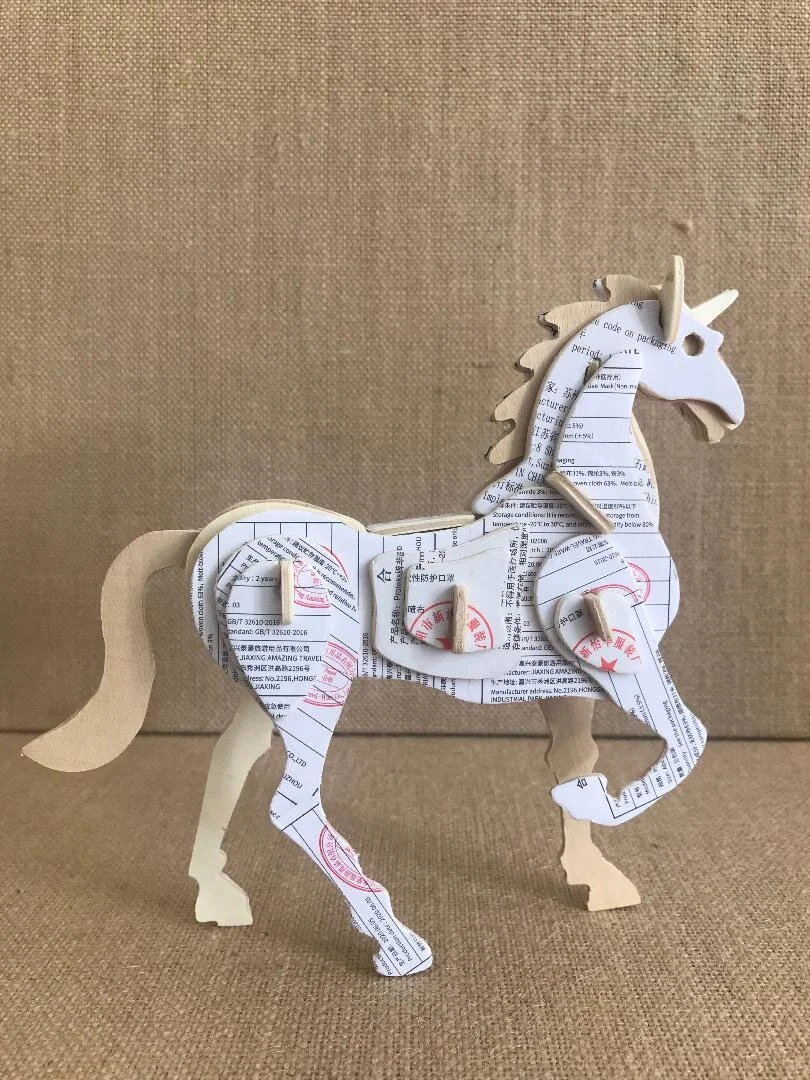
Virus No. 1: The Conversation We Need To Have
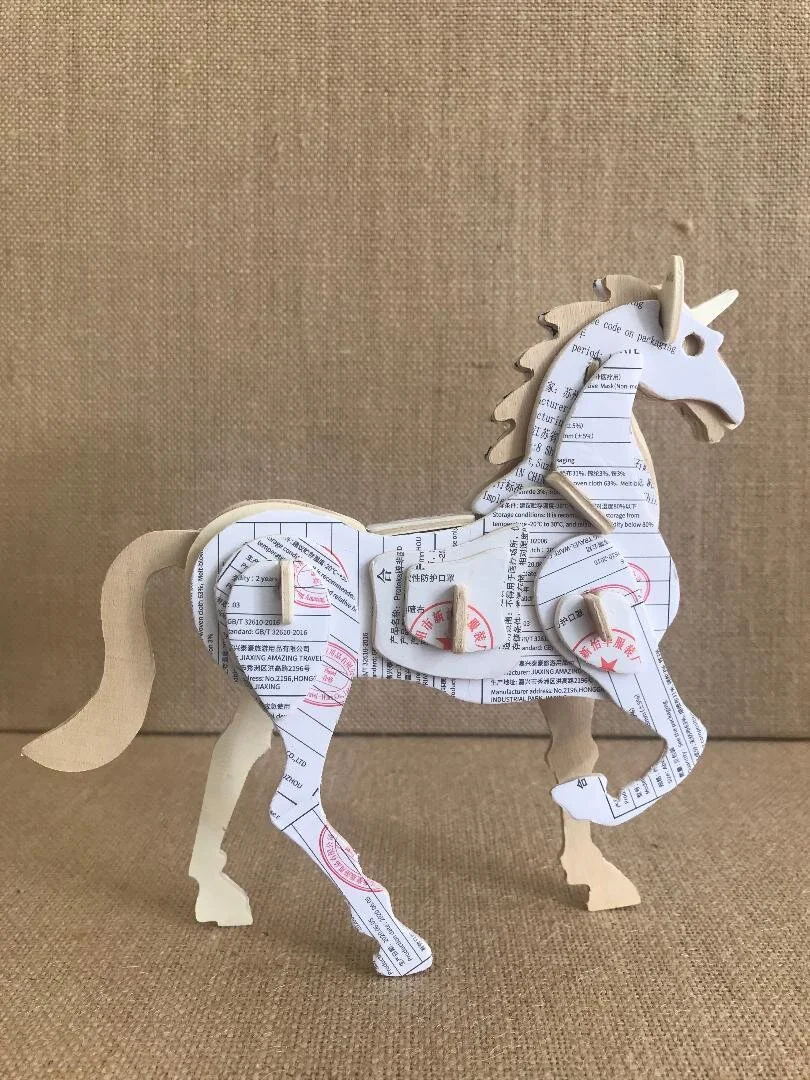
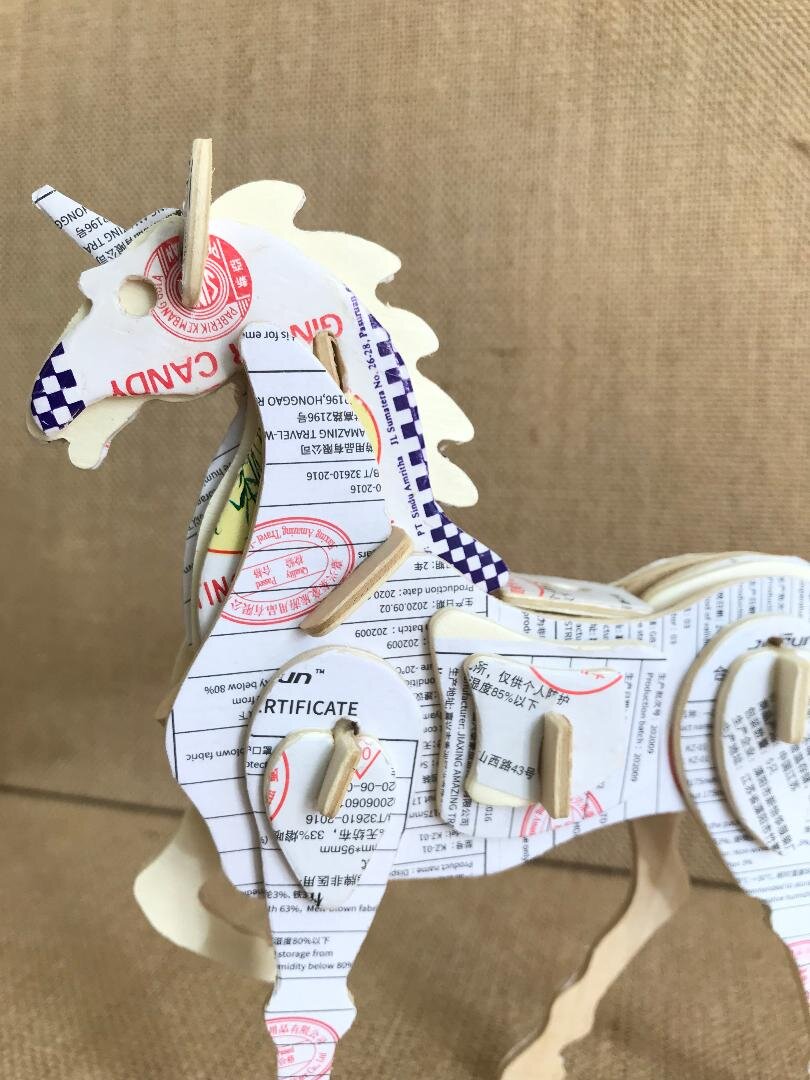
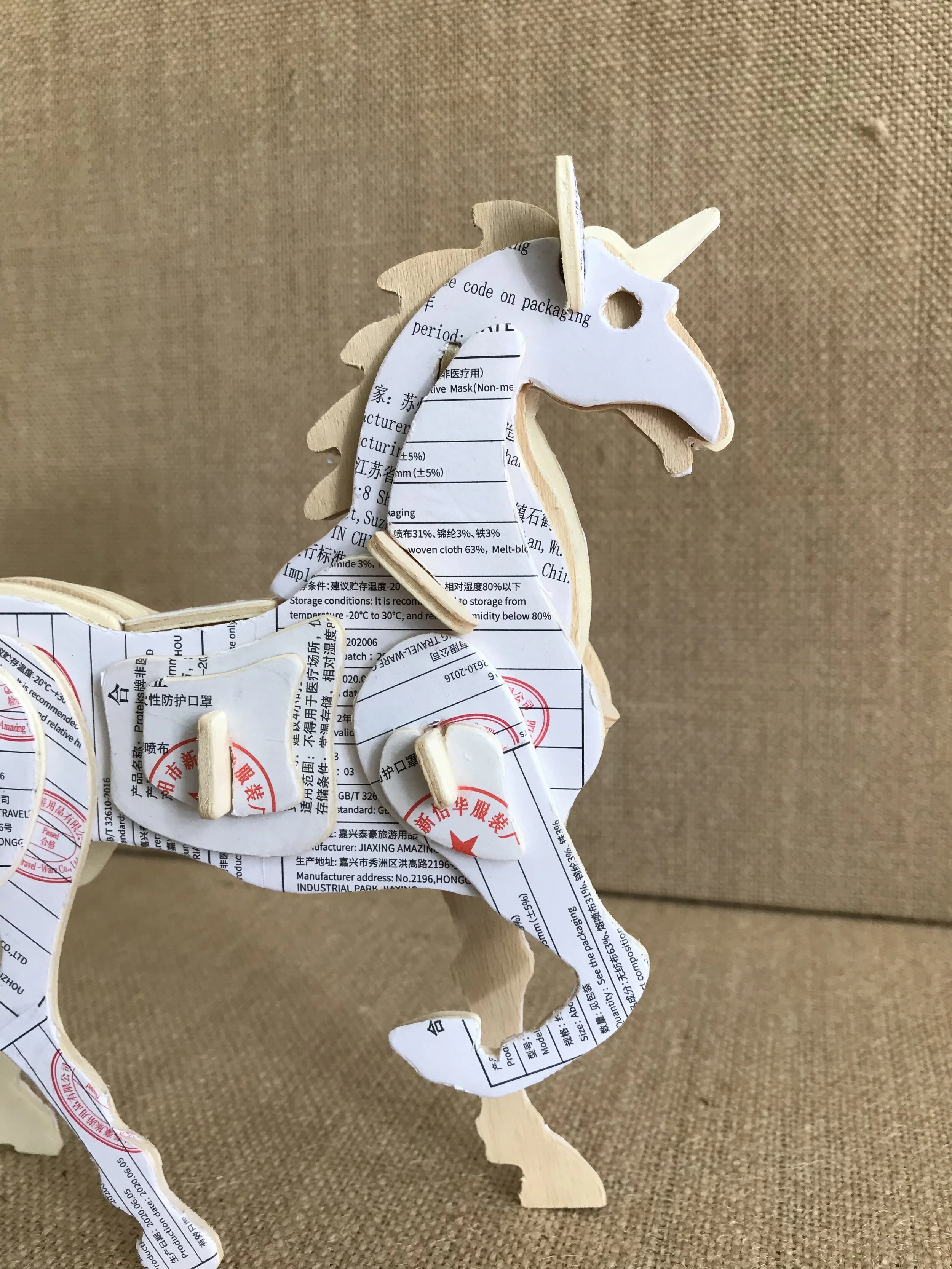
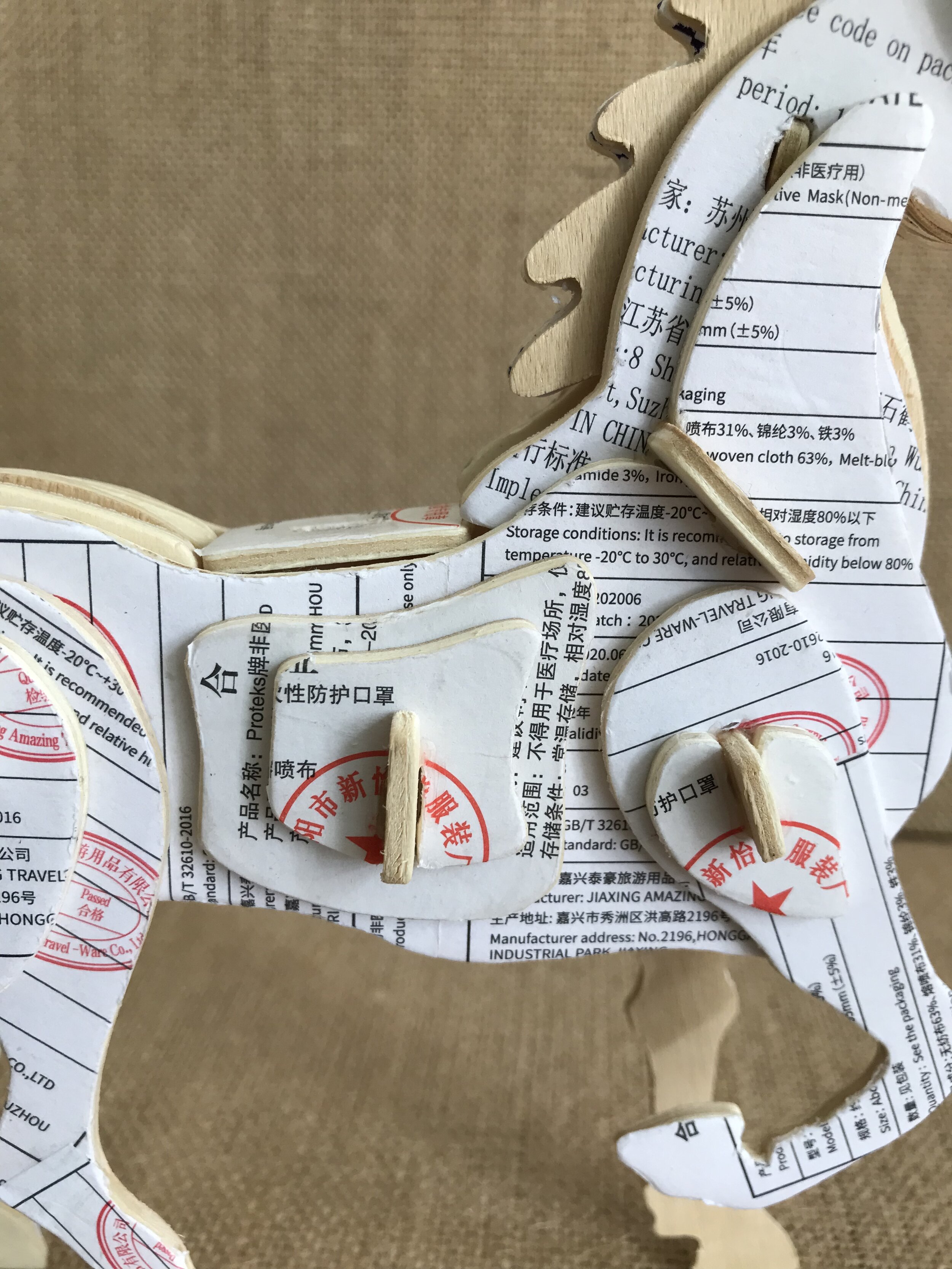
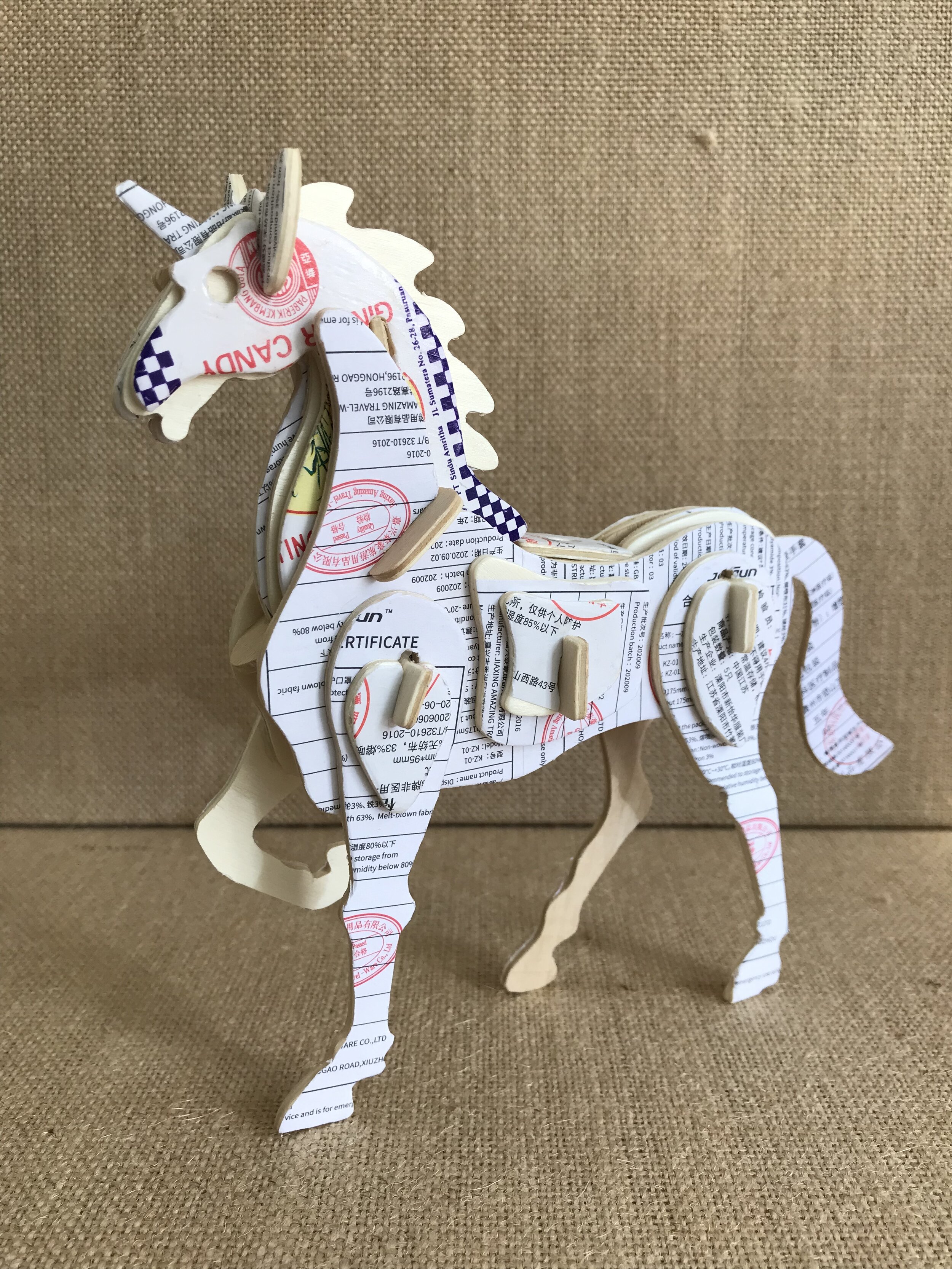
More Than Six Feet Apart.
This is the first art related essay I’ve written since the complete reopening of Florida. Kinda sorta post pandemic, but not really post anything because at this moment I know someone who is in a hospital ICU struggling with Covid. Not so post pandemic after all. I’ve not felt as troubled about Covid-19 and the variants (though this is horrifically troubling) as I have been about who we’ve become as disgruntled, reluctant, and resistant hermits. During the height of the pandemic, between baking bread, sidewalk chalk drawings, and at home workouts we’ve had too much time to find new things to separate us. We’ve been creative in creating new hurdles for each of us to jump over to prove we are (and I cringe inwardly and outwardly as I write this) ‘woke’. I really hate that word now. Unfortunately for all our newfound ‘understanding’ and additional ‘respect’ of each other, we all seem to talk and truly connect less. I guess it’s because we all know each other so well? Probably not though.
The fear that I have now is of a world where learning how to use chopsticks, lighting incense, doing yoga, and learning how to wrap your head might be characterized at misappropriation where at one point it was seen as making an attempt to understand and experience another culture. I digress though. We need a drum circle and an exorcism to get through a full conversation on race and culture.
The Hardest Art Description I’ve Ever Had to Write…
This is by far one of the hardest work reflection/summaries I’ve ever had to write.
To say that racism is difficult to discuss is an understatement. I personally believe it is even more difficult to discuss among various minorities that may encounter racism. Unfortunately one aspect of racism that isn’t often discussed is the racism that some minorities inflict upon other minorities. I can only speak about my personal experiences but I can also say that most of these issues are universal.
When we address racism and other discrimination we often do it in pieces. We have to remember that those of European heritage/white people aren’t the only individuals that commit acts of harmful racism; even though those acts of racism have had long lasting effects and are pervasive, they aren’t unique in their nature.
We all believe harmful, racist, discriminatory untruths about each other. We have all ingested and digested this racism. But do we perpetuate the stereotypes, the hurt, and strain? Or do we, community to community, work together to find solutions and common ground?
A Different Kind of Tower of Babel.
My concern about how we interact as humans at the moment leaves us in either an echo chamber or an individual silo. Addressing these individual untruths as unique, independent, and seemingly separate issues (Asian and Jewish hate crimes, African Americans experiences with police brutality and the justice system, church and mosque shootings for example) will end up leaving us where we all started: segregated. We must address racism as the cancer it is: You don’t remove it one piece at a time, you cut it all out. If we don’t focus on what unifies all of these challenging issues none of us will truly be communicating. Finding solutions that could positively affect us all will become an impossibility.
The pandemic year has among its highlights some of the most horrible acts of racism.These acts among other things are what inspired Virus No. 1: The Conversation We Need To Have. This piece - a 3-dimensional wooden unicorn puzzle- addresses particularly painful racist encounters that I hadn’t discussed with many people concerning my time in San Francisco. Recently, I ended up in a conversation with two other women, also of minority backgrounds: Filipino-American (Lissette), Mexican-American (Eve) where I discussed these experiences. Until my conversation with these two women I didn’t realize how traumatic this time in my life had been.
Trauma From An Unexpected Place.
A number of years ago, pre-pandemic in San Francisco I spent most of my time looking for affordable housing (otherwise known as homeless) I went to many properties shown to me by people of many different backgrounds. I noticed that each time I was shown a property by someone of Chinese descent there was an attempt to convince me I either didn’t want the space or I was told that it had already been rented right after I was shown the apartment. Another experience involved my mother and I walking through Chinatown. My Mom was hot and a little dehydrated. We stopped in a restaurant to get her some water. We were ignored. We went into another place and no one would serve us. After we found my Mom water and shelter from the heat, I was troubled by a huge ‘what if’. What if my Mom had passed out? Who would’ve helped us in Chinatown, if anyone? Eve talked about how as a very light complexioned Mexican American she was often mistaken for white. Two things often happened to her, she said: white people spoke with her in a disparaging way about other minorities and she was often told by other Mexicans she wasn’t ‘Mexican (or dark) enough’. Lissette spoke to us about her strained relationship with her parents because of derogatory views they’d expressed about other people of color.
As humans we have such a long way to go in an effort to evolve to become better humans. The key is to at least begin the journey down that long road by talking to one another and having tough conversations. Racism to me is the first and most pervasive human virus and no one really seems to be working on a vaccine.
On Trend.
I apply to many art and grant opportunities throughout the year like thousands, if not millions of other artists around the world. Happily. We all apply hoping that our proposals will be accepted. Interestingly enough, I enjoy the learning process that is necessary to understand how to respond to each opportunity. I change as an artist each time, or at least have a better understanding of how to present my work to others. It’s a healthy exercise if you care about the art sharing portion of the business and world that is art.
It’s become more obvious to me that organizations and entities doing the choosing are doing so based on what is on trend. On trend in terms of politics and culture, what people post about on social media the most. Not that these current events shouldn’t be highlighted or that a response to them can’t be profound or nuanced but… Isn’t the purpose of art (most of the time) to push us forward? To bring things to our attention or into view that weren’t even on our radar?
To me it would seem you (an art entity or money giving organization) aren’t creating the next wave of art artist or even predicting it/them but simply riding a wave (of safety) someone else has created which might ensure sales or positive feedback. Of course show attendance and money are important factors of how art is chosen to fund and show. Having assurances in relation to these factors makes the investment of art a little safer. Safety is the exact opposite of art isn’t it?
Just a thought…
TALENT: An Interview with artist Jo DeSerio Jones
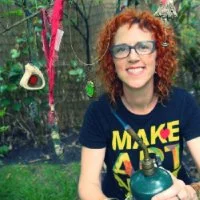
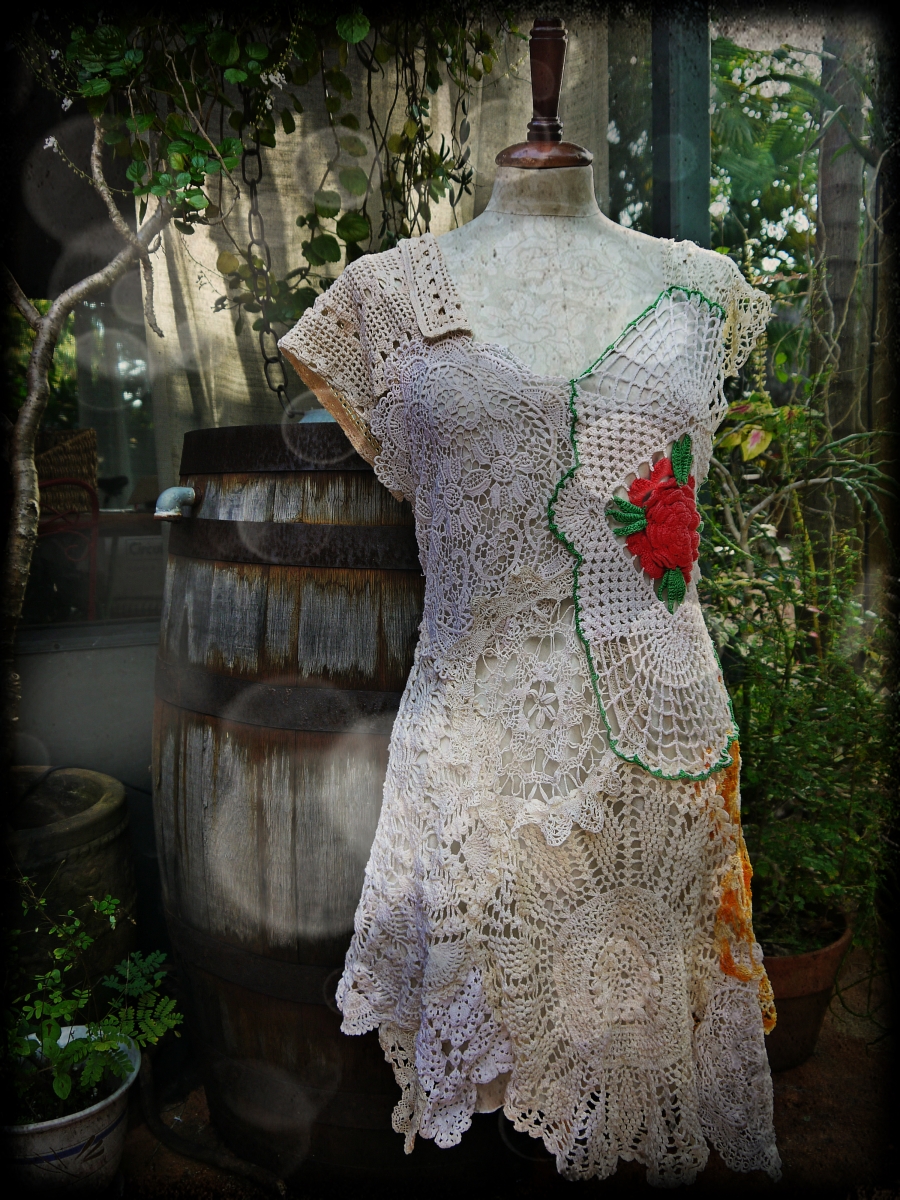
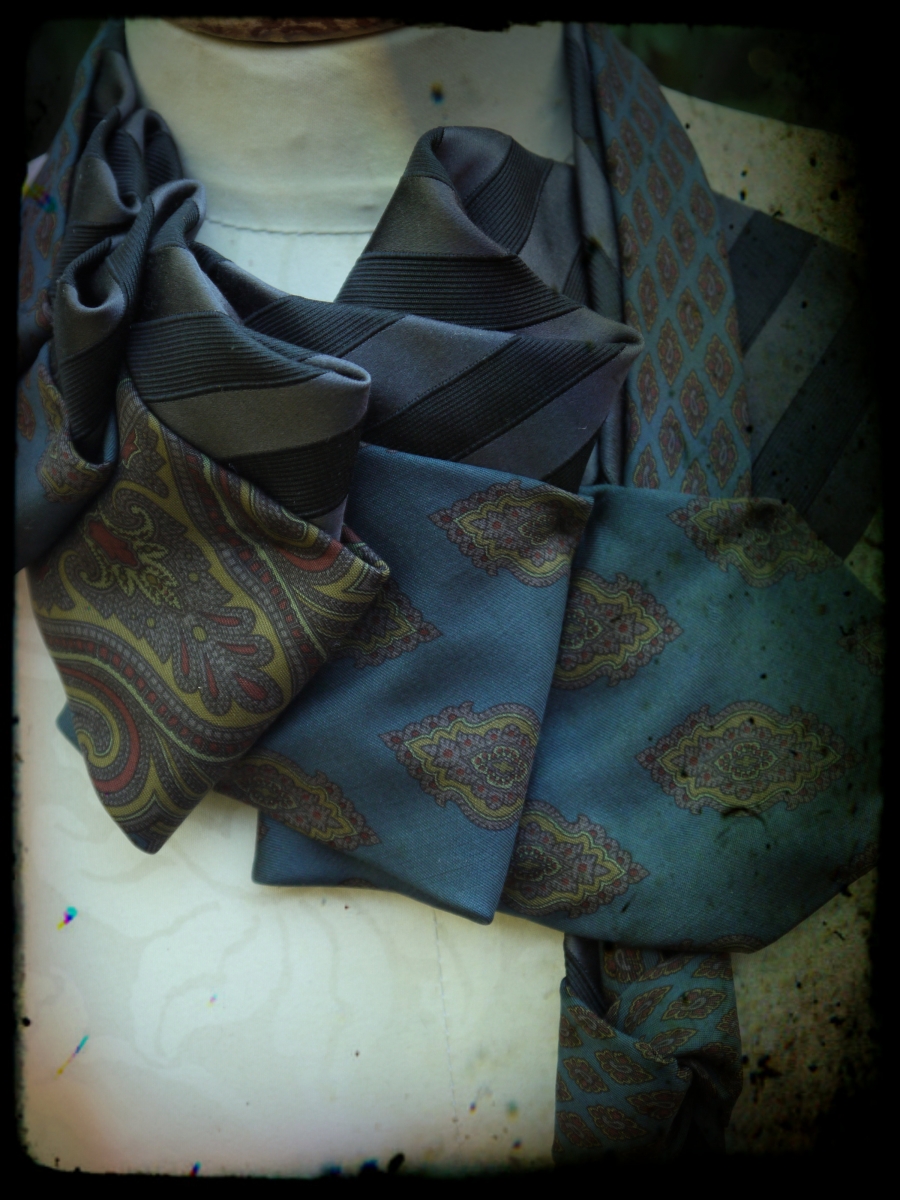
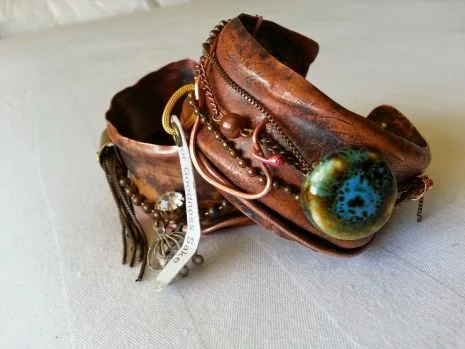
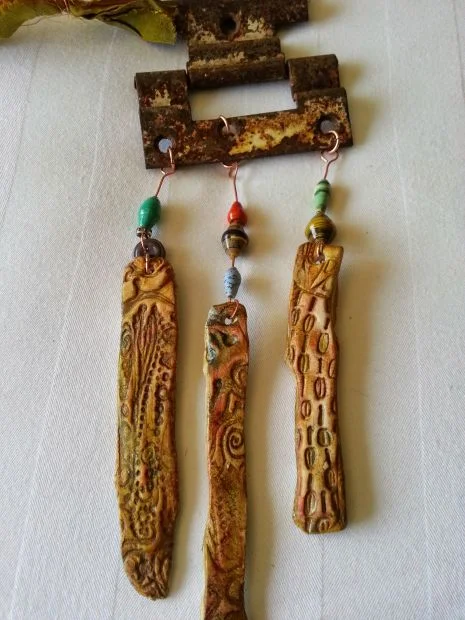
Right now ‘recycled art’ is a trend that can’t be denied. There are many artists making the move toward incorporating recycled components into their artwork…for now anyway. More than likely a large number of them do it because all of the other cool kids are doing it. But what separates those artists who say they recycle because it tugs at a potential customer’s heartstrings from those who recycle because they care? I talked a little to artist Jo DeSerio Jones about what separates her from the pack and how she's saving the planet one piece of art at a time.
Atelier: What type of work do you do? What's your favorite media?
JO: I'm a mixed media artist making mostly jewelry. I find inspiration in many forms. At this time I am particularly fond of metal, fossils, concrete and leather.
Atelier: How do you incorporate fossils? Do you use a special process to prep them?
JO: I'm currently making molds from fossils, then casting in concrete or resin and adding many patinas until I get the look I love. So I'm creating new fossils that look old! I later incorporate them into my jewelry as layered components.
Atelier: What inspires your work for Jomama? I've noticed a number of influences; steampunk, nature... What influences you the most?
JO: My biggest inspiration is from nature in the form of materials such as wood, pods, shell, and fossils, [also] patina from weathering and rust; as well as shapes that only nature could create.
Atelier: I love that you incorporate nature into your work. Is there a deeper meaning when adding it into your pieces? Spiritual or otherwise?
JO: I've always said I feel a connection with the earth. It may come from childhood where I spent a lot of time outdoors where I lived in Northern New Jersey. I look at items that nature offers as a gift, not a byproduct.
Atelier: Right now there seem to be lots of artists incorporating eco-friendly components into their work, what separates you from the crowd and makes your work different?
JO: Being an environmentalist is a way of life for me first. I'd have to say that my work is a byproduct of my lifestyle. I'm not just creating eco products, I'm living it. Not only do I recycle items and work with found objects, but I also search for products that have the least environmental impact as well as buying things that are local or made in the USA. All being important aspects of sustainability.
Atelier: That's awesome that you take all of those things into consideration when creating your work. Do you feel like it might be only the job of a few of us (artists) to incorporate eco-sensitivity into our work while others focus on other things? Or can we all do our part?
I think we can all incorporate eco-consciousness into our work, but your eyes have to be open to the opportunities around you, no matter what form they come in.
Atelier: So you do commissioned pieces as well. Talk a little about what goes into completing pieces for clients.
JO: Typically when someone commissions me it's because they like the uniqueness of my style. So going into a project I know that I can be me. However, I ask questions pertaining to their likes and style, such as colors, a feeling they want it to reflect, or incorporating personal items or family heirlooms into the piece so it is a part of them as well.
Atelier: Which do you prefer doing, work for others or your own personal projects and why?
I'm an artist, so I definitely prefer working on personal pieces that don't have limits. There's satisfaction in that freedom and it shows in your work, making it more desirable.
Atelier: What do you feel is our responsibility as artists in educating the public about recycling? Do we have a responsibility specifically as artists? I know this is kind of a repeat of my earlier question, but can you talk a little bit more about your perspective?
JO: I feel we have a responsibility as humans. I have come to realize through the years that there can be a lot of unnecessary waste in the art world that every artist should try to be aware of. I think if you are an environmental artist that you should most definitely educate people about the ways of your work and items used. That is how we educate, inspire and open people's eyes to new ways of thinking. People are amazed by some of the things I reuse. I see the intrigue in my work all the time when I do shows and it's very rewarding. I love when I inspire others and get them to think outside of the box!
Atelier: Any projects you working on at the moment?
JO: I am currently working on more steampunk ballerina sculptures for and art exhibit I will be participating in this fall called "The Lucky Ones".
Atelier: Tell me a smidgen more about the show. What's it about?
JO: The exhibit will be curated by an artist who is very involved in the community. Last year's event was covered by PBS and the local cultural division [where I live]. The common thread amongst selected artist seems to be color and texture, including photography and paintings.
If you want to find out more about Jo and her work check out her site www.shopjomama.com

The Artistic Perils of Constant Agreement
What is the real danger when artists just want to be 'liked'?
Please like me.
In the world as it exists at this moment, there a millions of us that determine our self-worth by how many 'likes' our last post received, how many 'friends' or 'followers' we have or how many people click 'favorite' for something we've done or said. Honestly, who doesn't want to have the warm glow of a spotlight shined on them from time to time? This should be o.k. , shouldn't it?
The sad reality is that we love those that are saying what we want (or think we want) to hear and completely cut out of our lives those that push us to think a little more about what we believe. In the end, not only do we miss out on the much needed pro/con balance that we all should have to make well-informed decisions, but we also miss out on the mental and emotional exercise of thinking progressively.
But what about when we as artists allow what has become our need to be liked to temper the work we do as well as our personal opinions and preferences when it comes to addressing certain subject matter? A little disagreement and discourse are what make the world go round, right? Of course, not to the point that it becomes destructive (Also known as filibustering. But that is, ahem...a whole other topic entirely.), but there is nothing wrong with disagreement. The world of art is built on the act of disagreeing.
A World Built on Disagreements.
Have I totally lost you?
Well, just think about it. I am going to scare myself now by actually remembering things that I learned in school: If you've taken any 20th century art classes, do you remember the day that your professor talked about the Impressionists? What about Pointillism? These artists had a decidedly different way of looking at the world that most traditional artists and art aficionado didn't agree with in their time. Most people thought they were crazy (well in the case of Van Gogh he was a smidgen kooky, but I digress...) What about Dada? People really thought those artists had lost it because they'd wandered so far from the path of the traditional. Of course now we all have the benefit of 20/20 vision. We can at least respect their way of looking at the world and the act of art-making if not their genius. More than likely, if these artists had been on Facebook, Pinterest, or Twitter their artistic self-esteem would have been in the toilet. No pins. No likes. And definitely no followers. What would we have missed out on if these artists hadn't had the courage to stand by their decision to disagree? You got it. Probably no Impressionists. Then what would we have put up on our dorm room walls in college if not cheap poster reproductions of "The Scream" and "Water Lilies"?
It's Our Responsibility.
It is one of the many responsibilities of artists to disagree. We have the opportunity to be reporters, truth tellers, messengers, therapists and psychologists. We see the world differently. It is meant for us to help others see things differently as well. And a lot of the time people aren't going to be so happy with what we tell them. When we choose to RESPECTFULLY disagree, we expand someone's world a little by (hopefully) prompting and exchange of ideas. Because I truly hope that someone would ask me why I think the way that I do instead of stomping off in anger. That way we can chat. I can learn something and they can learn something.
Next time...
So next time you click the 'like', 'favorite', 'pin', 'follow', 'friend' or whatever the button may be, think a little more about why you do it. Why not go ahead and click favorably even when we don't agree but appreciate and respect when someone has challenged us intellectually and made us think. Thinking is good.